


How Play-Based Learning Builds Confidence in Early Childhood
- misstomlinacademy
- Apr 30
- 2 min read

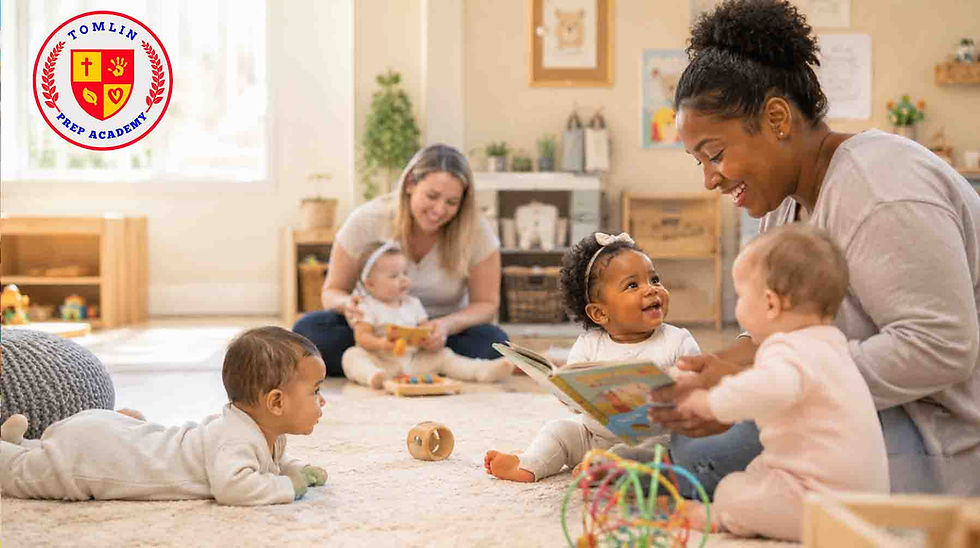
Young children learn best when they are actively engaged, curious, and having fun. In early childhood education, one of the most effective ways to support learning and development is through play-based learning.
Play-based learning combines structured educational goals with hands-on exploration, creativity, and social interaction. Through play, children build important academic, social, and emotional skills while developing something equally important: confidence.
When children are encouraged to explore, solve problems, and make choices through play, they begin to believe in their own abilities.
Encouraging Independence and Decision-Making
Play gives children opportunities to make choices on their own. Whether deciding how to build a tower, create an art project, or participate in pretend play, children practice independent thinking.
These experiences help children:
Make decisions confidently
Solve simple problems independently
Explore ideas without fear of failure
When children successfully complete tasks through play, they develop a stronger sense of self-confidence.
Creating Safe Opportunities to Try New Things
Play-based environments encourage exploration in a low-pressure setting. Unlike rigid tasks with only one “right” answer, play allows children to experiment, make mistakes, and try again.
This helps children learn that:
Mistakes are part of learning
Trying something new is okay
Persistence leads to growth
As children overcome small challenges during play, their confidence naturally grows.
Building Social Confidence
Play often involves interacting with peers. Whether children are sharing toys, building together, or participating in imaginative games, they practice important social skills.
Through group play, children learn how to:
Communicate their ideas
Take turns and cooperate
Resolve simple conflicts
Build friendships
Positive social experiences help children feel more comfortable and confident in group settings.
Supporting Creativity and Self-Expression
Creative play gives children the freedom to express themselves. Art, music, storytelling, and dramatic play all allow children to share ideas, emotions, and imagination in meaningful ways.
When children feel their ideas are valued, they become more willing to participate, contribute, and express themselves confidently.
Strengthening Problem-Solving Skills
Play naturally introduces challenges that require children to think critically. Building structures, solving puzzles, or figuring out how to complete an activity helps children develop resilience and confidence in their abilities.
Each small success reinforces the message: “I can do this.”
Preparing Children for Future Learning
Confidence built through play carries over into other areas of development. Children who feel confident are more likely to:
Participate in classroom activities
Ask questions
Try new skills
Approach learning with enthusiasm
This foundation supports long-term academic and personal growth.
Learning Through Play at Tomlin Academy
At Tomlin Academy, we believe learning should be engaging, meaningful, and fun. Our play-based approach helps children build confidence while developing essential academic, social, and emotional skills.
By combining structured learning with creative exploration, we help children become curious, capable, and confident learners.
📞 Call or text: 816-785-7878
📅 Schedule a tour: https://www.tomlinacademy.net/schedule-a-tour
We look forward to welcoming families who are seeking a nurturing and enriching early learning experience.


Comments